

Refinery Turnaround Security: Managing Risk During the Highest-Stakes Window

Refinery turnaround security requires a different level of planning and control than day-to-day industrial facility security. For most industrial facilities, day-to-day operations carry a predictable rhythm. The same crews, the same access points and the same routines. But when a refinery goes into turnaround, that rhythm breaks entirely.
How to Think About House of Worship Security: A Guide for Faith Leaders and Security Directors

This guide provides a practical framework for building an effective house of worship security program that protects congregants without compromising a welcoming environment. It outlines how faith leaders and security teams can start by assessing their institution’s unique threat profile, then align the appropriate level of security. Read our full series on security in religious institutions to learn more.
Multi-Site House of Worship Security: A Smarter, Scalable Approach

Multi-site houses of worship face complex security challenges across campuses, neighborhoods and service schedules. Learn how centralized oversight and the right mix of security resources can strengthen your religious institution security program.
The Value of Off-Duty Law Enforcement for Houses of Worship

This article explains why many houses of worship are reevaluating their security approach as threats become more targeted and severe. It highlights how off-duty law enforcement provides a higher level of deterrence, authority and situational awareness compared to traditional or volunteer-based security models.
Why Off-Duty Law Enforcement Works So Well in Religious Settings

Security outcomes are shaped not only by coverage and data but by the psychology of safety, how employees and customers perceive their environment, the credibility of the security presence and the quality of interactions during tense situations. Read our full blog series about the psychology of safety in workplaces and communities.
Protecting Houses of Worship Without Turning Them into Fortresses

Houses of worship face a unique challenge: how to stay open and welcoming while addressing real security threats. This article explores why traditional approaches often fall short and how off-duty law enforcement offers a more balanced solution, combining behavioral expertise with community familiarity.
The Psychology of Safety: Building Security Programs That People Trust

Security outcomes are shaped not only by coverage and data but by the psychology of safety, how employees and customers perceive their environment, the credibility of the security presence and the quality of interactions during tense situations. Read our full blog series about the psychology of safety in workplaces and communities.
The Hidden Psychological Cost of Unsafe Workplaces

Unsafe workplaces carry a hidden psychological cost that drives employee fear at work, disengagement and turnover long before a major incident occurs. This blog article explores how the perception of workplace safety, shaped by visible, capable security presence, directly influences whether employees feel safe at work, trust leadership and stay focused on their jobs.
The Psychology Behind Effective Security: Why Feeling Safe Matters as Much as Being Safe

Security isn’t just about preventing incidents; it’s about how people perceive risk and safety in their daily environment. This article explores the psychology behind effective security and why employees’ ability to feel safe directly impacts behavior, performance and retention.
Why De-Escalation Works: Psychology and Decision-Making in Security
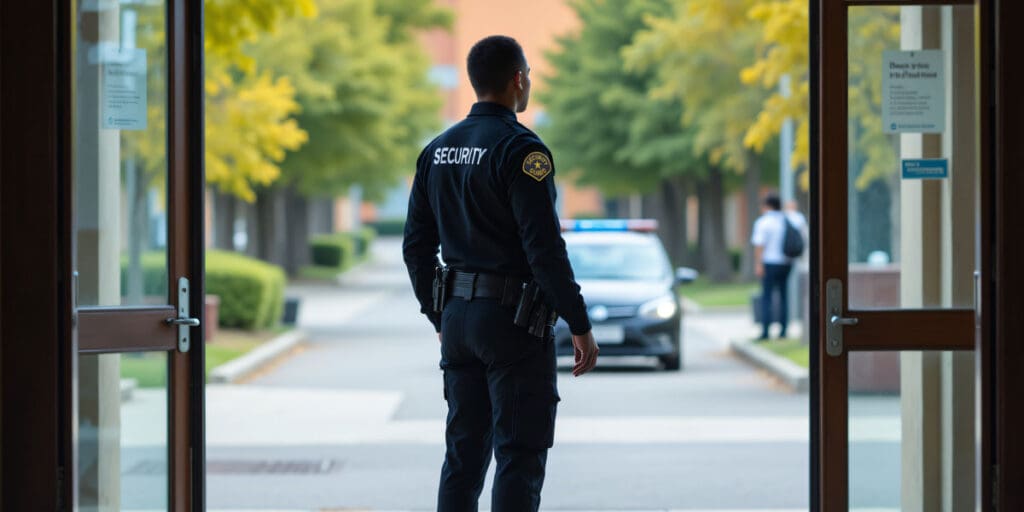
One-size-fits-all security programs fail because people judge safety by perception, not policy. Learn how psychology, environment and experience shape effective security outcomes in this article.