

Key Takeaways
- Religious institutions require security that preserves welcome while minimizing threats
- Off-duty law enforcement security offers behavioral and community expertise
- Professional judgment and familiarity build trust that tactical presence cannot
- Adaptive security scales to actual risk without permanent fortification
Houses of worship face a unique security challenge. Unlike retail stores or corporate offices, these spaces exist to welcome strangers. Their mission requires openness. Yet the threat is real and growing.
The FBI’s 2024 Hate Crime Statistics reveal that religious bias offenses represented nearly 24% of all reported hate crimes, with attacks targeting congregations precisely because they gather in confined spaces with limited exits. And 48% of people who attend in-person religious services report feeling less safe, according to Security Today.
Faith leaders know what happens when security measures go too far. Metal detectors and armed checkpoints may harden a building, but they often soften attendance. Families reconsider bringing children. First-time visitors feel screened rather than welcomed. The space becomes safer in one sense, while losing something essential in another.
This is the conundrum: protection that destroys what it’s meant to protect.
For multi-campus ministries, religious institutions with attached schools and national faith networks, the stakes extend beyond a single sanctuary. Church security decisions affect board governance, insurance exposure and enterprise-wide policy. Leaders aren’t just protecting one building. They’re accountable for people, reputation and consistency across every campus.
What Effective House of Worship Security Requires
Effective house of worship security is not defined by visibility alone. It requires alignment between risk, authority and mission. At a minimum, leadership should evaluate four core capabilities:
Behavioral threat recognition.
The ability to identify concerning patterns early and intervene before escalation.
Intervention authority when appropriate.
Personnel who have the legal authority and training to act if a situation turns violent.
Coordination with local law enforcement.
Clear communication channels and defined escalation paths with responding agencies.
Discreet integration into worship environments.
Security that protects without disrupting the spiritual experience.
The Welcome vs. Protection Dilemma
Safety concerns are unique in houses of worship. These aren’t just places to gather. They’re holy spaces where people should find peace.
The State of Safety at U.S. Religious Institutions report by Verkada found that nearly two-thirds (62%) of adults who attend religious services at least once a month agree that if there were more security measures in place at their houses of worship, they would feel safer.
But traditional security approaches fall short because they weren’t designed for faith communities. Retail-focused guarding targets theft and shoplifting. Those nuisance crimes rarely threaten houses of worship. Instead, religious institutions face a different threat profile. Attacks are rare but typically violent, targeting confined spaces where congregants have few escape routes.
Putting a security officer at the door can provide visibility and reassurance. In many environments, unarmed officers play an important role in access control, customer service and day-to-day safety support.
In houses of worship, leadership should evaluate whether the assigned personnel have the authority, training and response capability that match the specific risk. When incidents occur in religious settings, they unfold quickly and require trained judgment. The question is not armed versus unarmed. It is whether the security model aligns with the threat profile and mission of the institution.
Why Off-Duty Law Enforcement Works
The most effective security for houses of worship often blends presence with professional authority. Off-duty law enforcement officers bring training in de-escalation, behavioral assessment and lawful intervention that extends beyond traditional guarding.
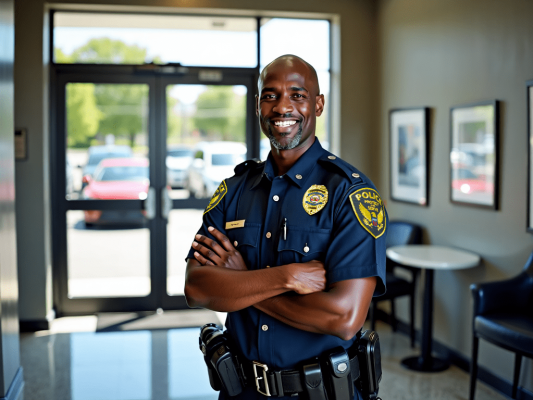
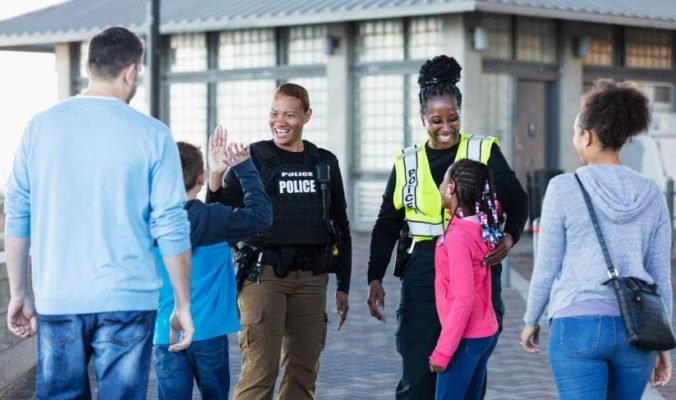
Consider how church security works in practice. An off-duty officer working traffic control outside a service becomes a familiar presence. Congregants wave. Children recognize them. When service begins, that same officer moves inside to maintain a calm, observant presence near entry points.
Because they understand behavioral cues, these officers note concerning patterns early. Someone who arrives late and seems agitated or a visitor whose body language signals distress. Trained law enforcement can assess and act before situations escalate.
More importantly, they understand the neighborhood. Officers who work in local communities know the difference between a genuine threat and a regular presence, and bring context that prevents overreaction while maintaining vigilance.
Common Mistakes to Avoid
Eager to address security concerns, some faith communities make decisions that create more risk than they prevent.
Relying on Untrained Volunteers
A common example of well-intentioned security is relying on volunteer congregants with concealed carry licenses.
While motivated by genuine concern, this creates liability. If an incident occurs and members of the congregation draw weapons, these volunteers have no way to distinguish helpers from threats. The potential for friendly fire in these scenarios is significant.
Beyond the immediate safety risk, there is enterprise exposure. Insurance carriers increasingly examine security posture, training standards and documented protocols. If a volunteer uses force outside a clearly defined policy, the legal and financial consequences extend to the institution, its board and its insurers. Civil litigation, coverage disputes and reputational damage can follow quickly.
Another error is assuming military service equals security expertise. Military service is honorable, but it does not automatically translate to appropriate use-of-force training for civilian environments. De-escalation in a sanctuary differs from engagement in a combat zone.
From an insurance and governance standpoint, good intentions are not enough. Carriers and underwriters look for formal training, current certifications, documented oversight and defined escalation procedures. Informal security teams rarely meet those standards, which can affect coverage terms, premiums and long-term risk exposure.
Evaluating the Role of Unarmed Security Officers
Unarmed security officers play an important role in many environments. They provide visibility, help manage access points and support day-to-day safety operations.
In houses of worship where the primary concern involves potential violence, leadership should carefully evaluate whether the assigned personnel have the authority and training that match the risk. In higher-risk situations, relying solely on personnel who are not authorized to intervene may limit response options if an incident unfolds quickly.
The goal is alignment. Security staffing should reflect the specific threat profile, congregation size and visibility of the institution.
Over-Militarization Drives People Away
Overcompensation creates its own problems. Metal detectors and security checkpoints at every entrance communicate that danger is expected. Congregants internalize that message and may find the experience stressful rather than uplifting. First-time visitors question whether they’re welcome in what feels more like an airport than a sanctuary.
It’s impossible to eliminate all risk, but the goal is to incorporate professional security that acknowledges real threats while maintaining an environment where people can worship without constant vigilance.
Scaling Security Thoughtfully
Not every faith community needs the same security approach. A small congregation in a quiet neighborhood faces different risks than a megaservice or a high-profile institution.
Several factors indicate when upgrading to armed, professional security makes sense:
Congregation size matters.
Larger gatherings in confined spaces create more attractive targets. The Verkada report found that 32% of people who attend services with 500 or more congregants are “very concerned” about safety, 18% more than those who attend smaller services. Services of this size require professional security capability.
Visibility increases risk.
Faith communities with television broadcasts, significant online presence or high-profile leadership attract attention beyond their local area. That visibility can draw threats from people with no connection to the community or the region.
Multi-site operations need coordination.
Organizations managing multiple locations require consistent security protocols, centralized oversight and clear lines of accountability. Boards increasingly expect documented policies, defined escalation paths and proof that security vendors meet professional standards. What happens at one campus can create legal, financial and reputational risk for the entire organization.
Geographic context shapes threats.
Urban, suburban and rural settings present different challenges. Understanding the local threat landscape, like crime patterns, demographic tensions and historical incidents, helps right-size security responses.
Technology can extend coverage without adding visible personnel. Modern camera systems with analytics detect unusual movement patterns or unauthorized access to restricted areas. Remote monitoring services provide eyes on buildings outside service times. These tools support professional security but shouldn’t replace human judgment and behavioral expertise.
For smaller congregations with limited budgets, the cost-benefit calculation shifts. Many faith leaders struggle with the decision, viewing security spending as money diverted from ministry. But protecting the congregation is ministry. People can’t worship if they don’t feel safe.
Frequently Asked Questions About House of Worship Security
What is the most effective security model for a house of worship?
The right model aligns personnel authority, training and response capability with the institution’s specific risk profile, size and visibility. Visibility alone is not enough. Leadership must evaluate whether their security team can recognize threats early and act when necessary.
Are unarmed security officers appropriate for churches and synagogues?
Unarmed officers play an important role in many environments, including access control and day-to-day safety support. In higher-risk religious settings, leaders should assess whether additional authority, training or coordination with law enforcement is warranted.
Why do some houses of worship use off-duty law enforcement?
Off-duty officers bring behavioral assessment training, lawful intervention authority and established coordination with local agencies. That combination supports faster response and clearer accountability when incidents unfold quickly.
How should multi-site ministries approach security?
Multi-site organizations need consistent policies, centralized oversight and documented escalation procedures. Security decisions at one campus can affect insurance exposure, governance and reputation across the entire organization.
The Path Forward
Houses of worship need professional security, but the choice isn’t between protection and welcome. It’s between thoughtful approaches that preserve holy spaces and reactive approaches that destroy them.
Professional law enforcement officers who understand behavioral cues and integrate with communities deliver protection without transformation. They bring training and judgment that untrained volunteers cannot match. Modern security adapts to congregation size and risk while respecting traditions.
When people gather in worship, they should feel safe enough to focus on something greater than themselves, and professional security makes that possible without building walls.
Protos Security provides modern, always-on security that adapts to the evolving needs of every individual and institution we protect. We serve houses of worship across all faith traditions, safeguarding these communities without compromising their sacred mission.
Build a security program that protects your people without changing your mission.
Talk to a Protos expert today.