

Key Takeaways
- Energy is among the most regulated industries in the U.S., making security compliance a non-negotiable
- Officer credentials like TWIC certification are mandatory requirements
- Heads of Security bear direct liability for their vendor’s compliance failures
- Geo-fencing, guard touring and data-validated billing facilitate greater accountability
Pipeline construction is not a forgiving environment. The sites are large, the timelines are long, the assets are expensive and the regulatory oversight is unrelenting. Energy is among the most heavily regulated industries in the United States, and the security programs that support pipeline construction and lay-down yard operations are not exempt from that scrutiny.
Running a compliant security program on your pipeline construction site requires verified credentials, documented patrol activity, enforced access controls and a vendor relationship built on real accountability. Yet too many security programs in this space still operate the way they always have: billing by the schedule, reporting by the honor system and hoping nothing goes wrong.
In an industry where a compliance gap can mean regulatory penalties, legal liability or physical harm, hope is not a strategy.
Understanding Risks, Realities and What’s at Stake
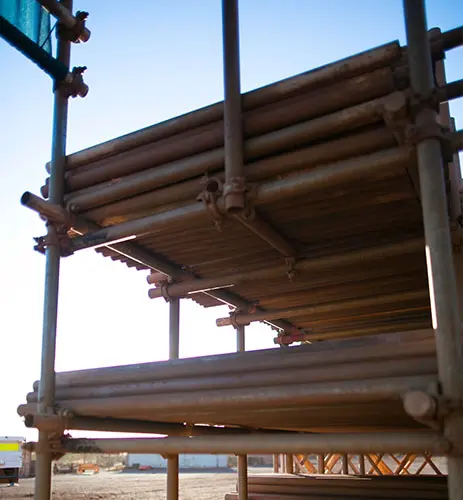
A lay-down yard is a designated staging area used during pipeline construction to store pipe, equipment, materials and supplies before they’re needed in the field. These yards are often remote, expansive and active around the clock, making them difficult to secure and attractive to bad actors.
Risk normalization is another, more subtle risk that deserves attention. On long-running construction projects, workers, site managers and security vendors can gradually become desensitized to security gaps. Gates left open, unverified contractors and missed patrol checkpoints start to feel routine rather than problematic. This behavioral pattern increases exposure, often before anyone recognizes it.
Equipment and materials theft.
Heavy machinery, copper wiring, pipe sections and fuel are high-value targets. Metal theft costs U.S. businesses an estimated $1 billion annually.
Unauthorized access.
Transient workforces, rotating contractors and large open perimeters create access control challenges. Without a stringent badging and check-in process, it’s difficult to know who is on-site at any given time.
Vandalism and sabotage.
Pipeline projects in particular can attract attention from environmental activists or disgruntled former workers. Sabotage on an active energy site can lead to project delays, costly repairs, environmental hazards and potential harm to workers and the surrounding communities.
Workplace violence.
Large crews operating under high-pressure timelines in remote locations can elevate tension between workers. Security officers provide visibility into behavioral risks and help surface issues early.
After-hours intrusion.
When crews leave for the day, sites without proper coverage become vulnerable. Local opportunists or even disgruntled workers can access the site and take advantage of limited oversight to steal materials or vandalize equipment.
What Compliance Requires on These Sites
Requirements vary by project and client, but several baseline standards apply across most energy sector construction environments.
PPE and Site Safety Standards
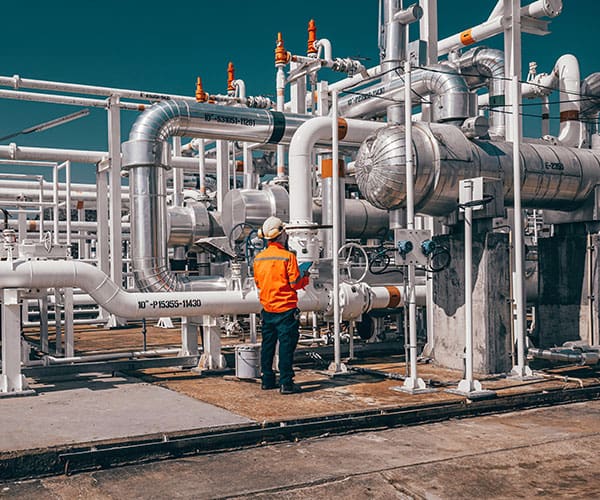
Active pipeline construction sites are governed by OSHA safety standards that apply to everyone on the worksite, including security officers. Typically required are:
- Hard hats
- High-visibility vests
- Steel-toed boots
- Eye protection
A security officer who arrives on a pipeline site without proper PPE cannot legally work that site, regardless of other credentials.
This detail gets overlooked in vendor selection more often than it should. Officers must be briefed on site-specific safety requirements before deployment and equipped accordingly.

Access Control Protocols
Effective access control at lay-down yards and construction sites typically includes contractor badging, visitor management logs and documented site entry procedures. Security officers are responsible for enforcing these protocols consistently.
That consistency matters beyond its practical function. Rigorous, visible access control creates perceived deterrence, so anyone approaching the site has the sense that unauthorized entry will be detected and addressed. It also shapes the behavioral response of workers onsite, reinforcing that security is taken seriously and that cutting corners will be noticed.
TWIC Certification
The Transportation Worker Identification Credential (TWIC), administered by the Transportation Security Administration (TSA), is a biometric identity credential required for unescorted access to secure areas of maritime facilities and vessels. For pipeline projects with any connection to ports, waterways or marine terminals, TWIC certification is essential.
Security officers working at or adjacent to these facilities must hold a valid TWIC card, which requires a background check and in-person enrollment. Deploying a non-TWIC-certified officer in a TWIC-required environment is a regulatory violation that can result in fines, project delays and loss of site access.
The Liability Gap
Ultimately, the Head of Security is accountable to the C-suite for vendor performance and carries the liability when a vendor falls short, whether that means a non-credentialed officer on a TWIC-required site or an unverified contractor who shouldn’t have had site access.
This is the accountability chain that too many security programs leave unexamined. Vendors self-report compliance, invoices reflect what was scheduled and nobody has the data to know what actually happened.
Risk normalization makes this worse. On a 14-month pipeline construction project, a vendor who occasionally misses a patrol checkpoint or deploys an officer without the right PPE may not trigger an alarm until there’s an incident, an audit or an insurance claim that suddenly requires documentation that doesn’t exist.
Protos Security offers security services including:
- Geo-fencing that verifies security officers are where they are scheduled to be, when they are scheduled to be there, and provides a real-time check on presence that self-reporting can’t replicate.
- Guard touring, which creates a timestamped record of every patrol, every checkpoint and every exception and holds up in an audit or liability review.
- Data-validated billing, meaning that invoices reflect what was actually delivered, and clients aren’t billed for coverage that did not happen.
Compliance and Accountability as a Differentiator
Pipeline construction and lay-down yard security involve regulatory complexity, physical risk and operational pressure. In one of the most regulated industries in the country, the margin for error is low and the consequences of compliance failure can’t be ignored.
Protos was developed to give Heads of Security the visibility they need to manage up, manage vendors and manage risk. Our remote services, security personnel and emergency security solutions are customizable and scalable according to your specific requirements — without sacrificing compliance.
Contact us to discuss how our modern approach to security can reduce your liability and raise your standard of accountability.
Managing contractor access and compliance during a turnaround is complex.
Protos can design a security program tailored to your facility’s risk profile and regulatory requirements.