

Key Takeaways
- Most theft at petrochemical facilities is planned, not opportunistic
- Turnarounds create the highest-risk window, with thousands of rotating subcontractors and elevated substance activity
- Geographic location shapes the threat — border facilities, Gulf Coast sites and remote pipeline corridors each face different risks
- Credentialed, layered coverage with verified accountability is the only program that holds up across complex, remote sites
- Perceived deterrence and behavioral response to security presence are as important as physical coverage
Petrochemical facility security requires a different approach than traditional industrial facility security. The scale of these sites, the regulatory environment around them and the threat landscape they face all demand more from a security program. A refinery or chemical plant isn’t a warehouse. It’s a high-value target with miles of perimeter, thousands of workers during peak periods and materials that draw attention from organized criminal networks.
Most security incidents at petrochemical facilities are not spontaneous. They are scoped, planned and carried out. A subcontractor notices copper piping during a turnaround and returns with a crew that night. A worker already knows which gate has no coverage after midnight.
The threat is rarely a stranger acting on impulse. More often it is someone who has already been inside, or someone gathering intelligence from outside the fence. Understanding that difference shapes how you protect a site.
What Are the Biggest Security Threats at Petrochemical Facilities?
Energy facilities face three overlapping categories of risk: insider threats and substance-related activity, organized external crime and geographic exposure. Each requires a different response. All three can exist on the same site at the same time.
The specific mix depends heavily on where a facility sits and what phase of operation it is in. A refinery near the Texas-Mexico border has different vulnerabilities than one outside Houston or along the Louisiana coast. A plant mid-turnaround carries different risks than the same plant during routine operations.
Insider Threats: The Risk Already on Your Payroll
Turnarounds are the highest-risk window. When a facility brings in thousands of subcontractors over 30 days, working 12-hour shifts seven days a week, the behavioral dynamics shift quickly. Workers are fatigued, under pressure and largely anonymous in a large crowd.
Substance activity rises under those conditions. According to SAMHSA’s National Survey on Drug Use and Health, mining and construction workers report the highest rates of heavy alcohol use among all full-time industries surveyed, at 17.5% and 16.5% respectively. Additionally, 11.6% of construction workers reported illicit drug use in the prior month.
When the cost of getting caught feels lower than the cost of not performing, risk normalization sets in. Workers on extended rotations far from home will take risks a day-shift employee at a local facility would not.
A visible, credentialed security presence changes that calculus. At one refinery turnaround, positioning a law enforcement officer and a detection dog at the entrance caused workers carrying contraband to turn back before reaching the gate, without a single confrontation. That is perceived deterrence working as intended. The social signaling of authority at a controlled access point altered behavior before any threat could materialize.
Internal theft follows a similar pattern. Workers assess coverage gaps during legitimate site access, identify high-value targets and calculate when they can act undetected. According to research from UNU-WIDER, oil theft costs an estimated $133 billion globally per year. Organized crime, not opportunism, is the operating model.
Managing security across a complex petrochemical site or turnaround?
How Do You Secure a Refinery During a Turnaround?
Turnaround security requires layered coverage. Off-dutyLaw enforcement manage traffic and perimeter access. Unarmed security officers handle gate check-ins and credentialing. Mobile patrols cover the interior. Remote video monitoring fills the gaps overnight.
No single service type handles it alone. No two facilities need the same mix.
In remote locations, staffing itself becomes a logistical challenge. Competitive pay, creative deployment schedules and accurate labor market intelligence all factor into whether an officer shows up and stays for the duration.
Accountability technology matters here. Geo-fencing, real-time officer location checks and guard touring systems create a verifiable record of coverage. When a gate post goes unmanned, you know immediately rather than finding out after something goes wrong.
Geographic Risk: Where Your Facility Sits Determines What You're Defending Against
Facilities near the Texas-Mexico border face cartel-related exposure. In May 2025, FinCEN issued an alert warning that fuel theft has become the cartels’ most significant non-drug revenue source, with groups including the Jalisco New Generation Cartel and the Sinaloa Cartel stealing directly from pipelines and refineries.
The risk extends beyond the fence line. Workers on two-to-three week rotations, socializing off-site after long shifts, face exposure that a perimeter plan does not address.
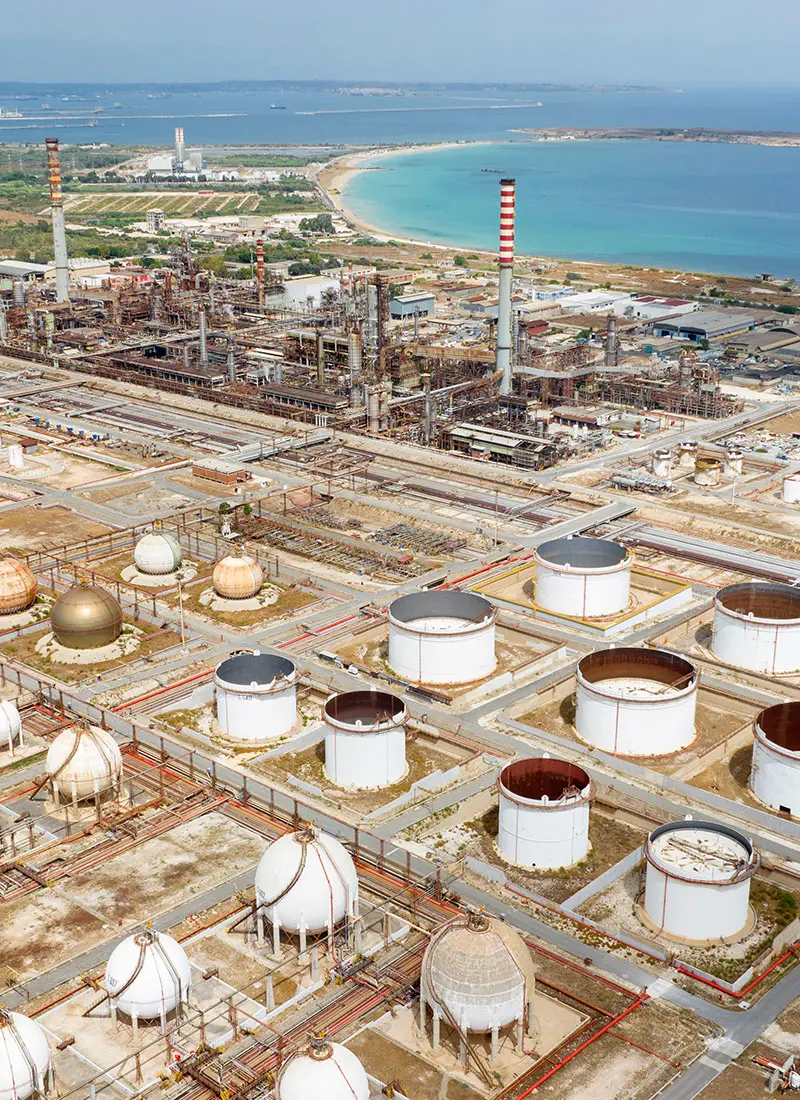
Gulf Coast refineries carry a separate maritime exposure. Coast Guard coverage handles open water, but internal waterside security is the facility’s responsibility. That boundary needs its own attention in any security plan.
Pipeline construction across Canada and the northern U.S. adds another dimension. Protesters go after equipment, not the pipeline itself. Cutting hydraulic lines, disabling fuel supplies and using physical obstruction to halt digging can extend project timelines by months. Consistent overnight patrol presence along a right-of-way is one of the few practical deterrents.
A Highly Regulated Environment Adds Complexity to Every Deployment
Petrochemical and energy facilities rank among the most heavily regulated work environments in the country, on par with banking. Security officers deployed at certain sites must hold a TWIC credential (Transportation Worker Identification Credential), along with site-specific safety certifications.
PPE requirements apply to everyone on site, including security personnel. Flame-resistant clothing, steel-toed boots, hard hats and safety vests are standard.
Sourcing officers who already hold the right credentials is not a minor detail. It directly affects whether a security provider can fulfill a contract at a regulated facility at all.
Why a Customized Security Program Is Not Optional
No two facilities share the same threat profile. One refinery’s biggest concern is cartel spillover from a nearby border crossing. Another deals with substance activity and internal theft during turnarounds. A third needs round-the-clock maritime monitoring.
A standard program applied across all sites misses all of this.
The behavioral response to security also varies by context. An officer in a rural location working a quiet shift produces a different deterrent effect than one managing a gate during a 1,000-person turnaround. Designing coverage for the specific environment is what separates a program that protects a facility from one that merely occupies it.
Protos Security‘s chemical and petrochemical security program coordinates a network of local security vendors alongside the largest off-duty law enforcement network in the country, with technology to verify that officers are on-post and active at all times. For petrochemical clients, that means a single point of contact managing layered coverage across complex, often remote sites without the accountability gaps that create risk.
Consistent, credentialed presence at every access point, combined with visible patrol activity and real-time monitoring, changes the behavioral calculus for those who might otherwise test a site’s vulnerabilities. When the perceived risk of getting caught is high, planned theft, substance activity and unauthorized access all become less likely.
Protos promises a modern security experience that never settles and dynamically adapts when, where and how it’s needed. The approach is built around local expertise, agile coverage and the ability to scale quickly as conditions change.
Through always-accountable customer service, a single point of contact and billing based on delivery, Protos takes responsibility for performance on site. The result is consistent presence, verified coverage and a program that holds up under the conditions petrochemical facilities actually face.
Ready to strengthen security at your petrochemical or energy facility?
Talk with a Protos specialist about building a program that fits your sites.