

Contact A Security Expert

Contact Us 3 Column (Pardot-2025 new contact form)

The Psychology Behind Effective Security: Why Feeling Safe Matters as Much as Being Safe

Share:

Key Takeaways:

  • Feeling safe changes how people behave at work, not just how secure a site appears.
  • Perception of risk drives decisions and actions, even when incident data suggests otherwise.
  • Fear alters performance, attendance and trust long before incidents occur.
  • Security presence influences confidence through tone, visibility and approach.
  • When people trust security, they stay engaged, focused and willing to show up.

A retail store was getting robbed seven to ten times a day. Employees were quitting. Some simply stopped showing up on weekends. When a security officer finally arrived on site, the thefts dropped to almost zero within days.

The difference wasn’t just physical deterrence. The employees felt safe again. They returned to work. Performance improved. The store functioned.

This is what security leaders often miss: psychology drives behavior as much as any lock, camera or patrol route. Fear changes how people work. Perception shapes how they respond to threats. The way a security professional approaches a tense situation can determine whether it escalates or de-escalates in seconds.

How Fear Shows Up in the Workplace

Workplace fear doesn’t always announce itself. It appears in small ways first: employees avoiding certain areas, higher turnover in locations with recent incidents or staff who seem on edge during their shifts.

The threats are real and growing. Mass shootings dominate news cycles. Social media amplifies every violent incident. Retail workers face increasingly brazen theft. Bank employees receive threats after routine transactions go wrong. A terminated employee makes an offhand comment about “coming back to shoot this place up” and suddenly everyone wonders if they should come to work tomorrow.

Past experiences matter too. Someone who witnessed violence on a train platform will view their commute differently. An employee who survived a robbery will scan every customer who walks through the door. These individual histories compound into collective workplace anxiety that affects operations, retention and culture.

Security Should Do More Than Check a Box

A security presence only works when it’s properly trained, supported, and aligned with the environment. Learn how Protos builds programs that employees and customers trust.

The Hidden Cost of Unsafe Environments

When employees operate under constant stress, performance suffers. So does loyalty. One manager described meeting employees who expressed relief just knowing security was present after months of watching people walk out with stolen merchandise while being threatened for trying to intervene.

This creates a secondary problem: toxic work environments. When people don’t feel protected, morale declines. Collaboration breaks down. Good employees leave for safer options. The ones who stay often disengage, doing the minimum required to get through their shifts.

The cost isn’t just emotional. After one termination case where the departing employee threatened violence, the affected company deployed an armed off-duty law enforcement officer the next day. The decision sent two messages: we take threats seriously and we value employee safety. Both messages matter for retention and productivity.

Why Some Security Programs Fail Despite Meeting Requirements

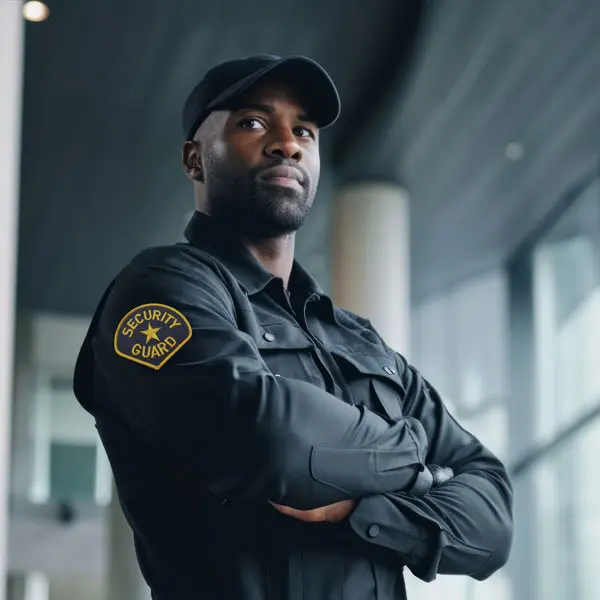
Uniformed security officer standing with arms crossed inside a modern building

You can have a security plan and still fail to make people feel safe. This happens when organizations treat security as a checkbox item for insurance purposes rather than as a strategic investment in people and operations.

Consider the restaurant with a security officer making thirteen dollars an hour. Limited training. Job description: observe and report. That officer might watch someone get assaulted and hopefully serve as a good witness afterward. The restaurant technically has security, but what value does it provide?

Or look at public transit. Despite increased police presence on train lines, a stabbing still occurs during morning rush hour. Even when the data shows transit is safer than ever, riders interviewed afterward say they don’t feel safe. Statistics don’t matter when perception tells a different story. If employees believe they’re at risk, they’ll behave accordingly regardless of what the data shows.

The gap between “having security” and “feeling secure” often comes down to training, experience and the ability to read situations before they deteriorate.
What Actually Makes People Feel Safer

The physical presence of trained security professionals changes environments. But not all presence carries equal weight.

Experience shows up in how situations are handled. A restaurant patron walks in with an open container. An inexperienced security officer may escalate the interaction. A trained officer handles it calmly, keeps things moving and resolves the issue without incident.

That difference matters.

How security professionals engage with people often determines whether a situation escalates or defuses. When the approach is right, most situations never become incidents.

Organizations that recognize this don’t just deploy security. They deploy the right presence for the moment — and that presence sends a clear message to employees and customers alike.

Matching the Right Resource to the Situation

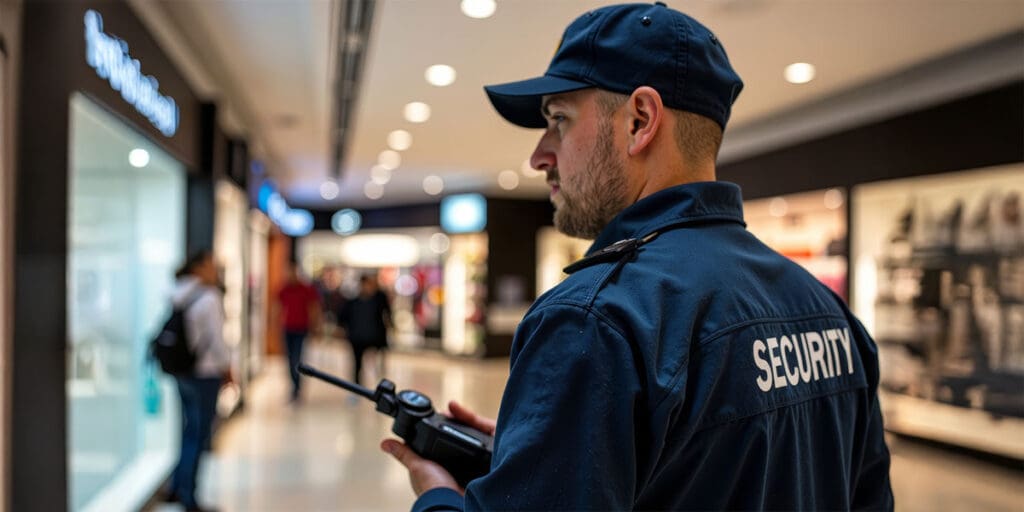
A uniformed security officer holding a radio patrol in a shopping mall

Not every security need feels the same to the people experiencing it. Executive protection creates different expectations than retail loss prevention. A bank dealing with customer threats carries a different emotional weight than a warehouse monitoring after-hours access.

When security matches the situation, people trust it. When it doesn’t, confidence erodes.

That’s why flexibility matters. The ability to align the right level of presence and expertise to the moment shapes how safe employees and customers actually feel.

Protos supports this alignment through multiple service lines that can be deployed individually or together. Guarding services provide scalable local coverage. Off-duty law enforcement is used when situations demand deeper experience. Remote guarding supports environments where visibility matters more than physical presence. Specialized services address high-risk or highly specific needs.

Matching expertise to need protects both outcomes and perception. When people see the right response in place, trust follows.


The Officer's Mental State Matters Too

Security professionals aren’t superheroes. They’re people showing up to demanding environments while managing real-life pressures outside of work.

An officer’s mental state directly affects performance. Focus, judgment and situational awareness suffer when someone is overwhelmed or unsupported. That shows up on post in ways clients and employees can feel.

Strong security programs account for this reality. They emphasize supervision, communication and accountability in the field so issues get identified early and addressed appropriately.

At scale, this isn’t a soft consideration. It’s operational. Officers who feel supported show up prepared. They stay focused. They perform.

Building Security Programs That Address Human Needs

Effective security programs recognize that people aren’t purely rational actors. Employees will avoid going to work if they’re scared regardless of whether statistics suggest their workplace is safe. Customers will shop elsewhere if they perceive a location as dangerous even when crime data shows otherwise. Security professionals will underperform if they’re struggling with personal issues that go unaddressed.

Organizations that understand this build security strategies around psychology as much as technology. They deploy visible deterrents when perception matters. They choose officers with training and temperament suited to the environment. They support their security workforce’s mental health. They use data to guide decisions but recognize that feelings and perceptions drive behavior.

The goal isn’t just preventing incidents. Security done well makes people feel protected enough to perform their jobs effectively, serve customers confidently and return to work tomorrow without anxiety.

When you invest in security that considers human psychology at every level, you’re not just protecting assets. You’re protecting culture, productivity and the fundamental trust that allows organizations to function.

Ready to build a security program that understands the psychology of safety?

Connect with Protos to discuss how our integrated approach addresses both physical security and the human factors that make people feel protected.

Explore the Full Psychology of Safety Series

Protos
Headquarters

383 Main Ave, Suite 505
Norwalk, CT 06851, USA
Phone: 203.941.4700

Protos
Headquarters

383 Main Ave, Suite 505
Norwalk, CT 06851, USA
Phone: 203.941.4700

Mark Hjelle

Chief Executive Officer

Mark Hjelle is the CEO of Security Services Holdings, LLC as well as Protos Security and its subsidiaries. Mark is an experienced Chief Executive Officer and Board Member who has led large national business and facilities services firms for nearly 25 years delivering strong top- and bottom-line growth while building high-performing teams with strong culture. Most recently, he was CEO for CSC ServiceWorks, a B2B2C provider of technology-enabled consumer services. Prior to CSC, Mark was President of Brickman/Valleycrest a national provider of exterior landscape and snow removal services. Over the course of his 18-year tenure at Brickman, he held numerous leadership positions in operations, finance and business development. Mark holds a Bachelor of Science degree in Economics from The Wharton School of Business, University of Pennsylvania, a Master of Government Administration from the University of Pennsylvania Fels Institute of Government and a Law Degree from Case Western Reserve School of Law.