

Contact A Security Expert

Contact Us 3 Column (Pardot-2025 new contact form)

Why De-Escalation Works: Psychology and Decision-Making in Security

Share:

Key Takeaways:

  • Experience teaches security professionals to read situations before they turn violent. 
  • Physical presence alone can stop an incident from developing. 
  • Verbal commands work when officers know how to use them. 
  • Training provides the foundation, but real-world experience sharpens judgment under pressure. 
  • Officers who understand when and how to intervene keep everyone safer. 

A shoplifter pulls a knife on loss prevention. The asset protection team backs off. The security officer on site gives verbal commands. The subject doesn’t comply. The officer draws their weapon. The knife drops. A search reveals a replica gun on the subject. 

The entire incident took seconds. What kept it from turning into a shooting or a stabbing wasn’t luck. The officer recognized threat indicators early, maintained distance, used verbal commands and escalated force only when necessary. 

That’s what separates trained security from warm bodies in uniforms. 

Incidents like this aren’t isolated. Recent retail industry data shows shoplifting incidents rose 18% last year, and threats or acts of violence during thefts climbed 17% over the same period, showing how quickly routine loss can turn confrontational. 

What Experienced Officers See That Others Miss

Security professionals with years on the street can walk into a situation and know who’s going to run, who’s going to fight and who’s just watching. They read body language before anything happens. 

Clenched fists. Tightening jaw. Someone who won’t make eye contact or someone who makes too much of it. The person in sneakers tied tight who might bolt. The one with gym shoes untied who’s carrying weight in their waistband. The guy on the bike circling the block who might be security for dealers. 

These details aren’t taught in manuals. They come from being there hundreds of times. 

One Chicago officer described responding to calls for years and just knowing how each person on a street corner would react before anyone moved. You pull up. You assess. You decide who gets approached first and how. Your partner already knows what you’re thinking because you’ve worked enough scenes together. 

That kind of situational awareness takes time. You can train officers on verbal commands and threat assessment protocols. But reading a room comes from exposure. 

Is your current security team the right fit for your environment?

Let’s review your current program together.

Presence Changes Behavior

Sometimes just showing up stops the problem. 

A security officer walks into a tense situation. People see the uniform. They see someone who’s calm and focused. The energy shifts. Subjects reconsider their next move. Potential threats back down before anyone says a word. 

Presence matters most when it creates perceived deterrence and the right behavioral response. An officer who’s clearly been in these situations before projects confidence. Someone who looks unsure or inexperienced signals vulnerability. People pick up on that immediately. 

The reverse is also true. Some officers escalate situations just by being there. Their tone is wrong. Their body language is aggressive. They turn a manageable problem into a confrontation. 

Personality matters. So does temperament. De-escalation doesn’t work if the officer can’t read the situation or adjust their approach. 

Verbal Commands Work When You Know How to Use Them

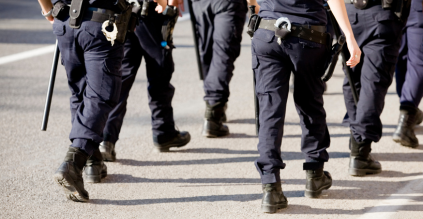
police officers walking down a street

“Drop the knife. Drop the knife.” 

Those commands worked in the shoplifting incident because the officer stayed calm, maintained distance and followed through with action when words didn’t immediately work. 

Verbal de-escalation isn’t about talking someone down for hours. It’s clear instructions delivered with authority. You give the command. You assess compliance. If the subject doesn’t respond, you escalate force appropriately. 

Slowing the encounter creates time. Time lowers stress, reduces misinterpretation and gives officers space to make better decisions instead of reacting to fear. Research has shown that this type of de-escalation keeps everyone safer. In one randomized controlled trial of ICAT de-escalation training, officers had 28% fewer use-of-force incidents, 26% fewer citizen injuries and 36% fewer officer injuries compared with those who didn’t receive the training. 

Officers need to know when talking is done. Waiting too long can get people hurt. Moving too fast can create unnecessary violence. 

The balance comes from experience. You learn when to talk and when to act. You recognize the difference between someone who’s scared and someone who’s calculating their next move. You adjust. 
Training vs. Experience

Formal training introduces structure. It exposes professionals to simulated stress, decision-making under pressure and the mechanics of response. 

Experience does something different. 

Real-world exposure teaches how people actually behave when emotions spike. It sharpens the ability to read intent early, recognize shifting behavioral responses and avoid risk normalization that leads others to dismiss warning signs. 

Over time, experienced professionals like off-duty law enforcement personnel learn when presence alone creates perceived deterrence and when a situation requires a firmer response. They understand how tone, distance and timing socially signal authority without provoking resistance.  

That judgment can’t be scripted. It develops through repeated exposure to unpredictable environments where outcomes matter. Watching seasoned professionals handle volatile situations teaches newer personnel when to step forward, when to slow things down and when to disengage entirely. 

This is where de-escalation succeeds or breaks down. Not in protocols alone, but in how experience shapes perception, response and control before a confrontation fully forms. 

Building Security Programs That Prepare for Real Threats

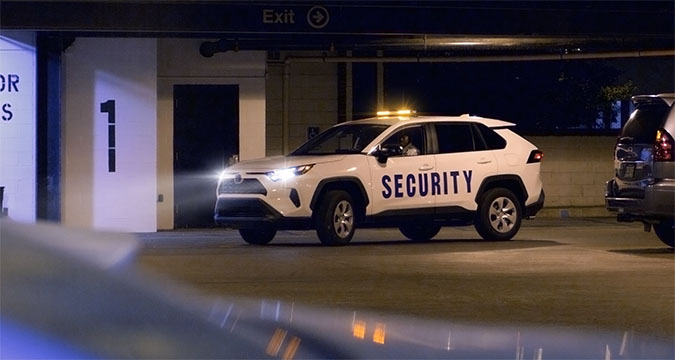
security officer in security marked vehicle at their postEffective security programs emphasize de-escalation techniques and real-world experience.  

Organizations need security professionals who can read situations early, maintain composure under pressure and make force decisions correctly when seconds count. They need officers with the temperament to talk people down and the judgment to act when talking is done. 

Research summarized by the National Policing Institute shows that officers trained in de-escalation were 58% less likely to injure community members, underscoring how composure and timing directly affect outcomes. 

When you invest in security that prioritizes experience, training and the right match between the officer and situation, you’re not just checking compliance boxes. You’re protecting people, operations and the trust that keeps your organization functioning. 

Ready to discuss how Protos deploys experienced security professionals who understand de-escalation?

Let’s talk about building a program that matches the right expertise to your specific needs. 


Explore our latest blogs

Protos
Headquarters

383 Main Ave, Suite 505
Norwalk, CT 06851, USA
Phone: 203.941.4700

Protos
Headquarters

383 Main Ave, Suite 505
Norwalk, CT 06851, USA
Phone: 203.941.4700

Mark Hjelle

Chief Executive Officer

Mark Hjelle is the CEO of Security Services Holdings, LLC as well as Protos Security and its subsidiaries. Mark is an experienced Chief Executive Officer and Board Member who has led large national business and facilities services firms for nearly 25 years delivering strong top- and bottom-line growth while building high-performing teams with strong culture. Most recently, he was CEO for CSC ServiceWorks, a B2B2C provider of technology-enabled consumer services. Prior to CSC, Mark was President of Brickman/Valleycrest a national provider of exterior landscape and snow removal services. Over the course of his 18-year tenure at Brickman, he held numerous leadership positions in operations, finance and business development. Mark holds a Bachelor of Science degree in Economics from The Wharton School of Business, University of Pennsylvania, a Master of Government Administration from the University of Pennsylvania Fels Institute of Government and a Law Degree from Case Western Reserve School of Law.