

IN THIS GUIDE:
The true test of an enterprise security program is not during everyday operations. The ultimate challenge arrives when a crisis hits. Whether responding to a natural disaster or securing high-value assets in a compromised environment, organizations have to look past initial and preventive emergency logistics to build long-term resilience with a thorough enterprise crisis management strategy.
This guide provides the core components of enterprise crisis readiness, detailing how to eliminate corporate bottlenecks, leverage real-time data and execute high-stakes recovery operations safely.
The Enterprise Crisis Management Blind Spot: When and Why Disaster Planning Fails
When preparing for hurricanes, wildfires or floods, corporate focus naturally lands on the immediate threat: protecting property, communicating closures and ensuring everyone evacuates safely. However, the most vulnerable operational test often begins after a disaster has struck.
What Is Disaster Recovery?
Disaster recovery is the deliberate process of safely reopening facilities, restoring physical security operations, supporting displaced employees and documenting emergency costs. True recovery planning must be mapped out before a crisis strikes so local teams know exactly when they can act, who owns each decision and how emergency security staffing will be deployed.
The Danger of Over-Centralization During a Crisis
If a local manager has to wait hours for arbitrary corporate approvals to secure a shattered entrance or deploy emergency guarding services, risks multiply exponentially. Delays leave sites exposed to looting, property damage, inventory loss and employee safety concerns. In Why Retail Disaster Recovery Is the Most Overlooked Phase of Disaster Planning, we cover the power of a decentralized model for immediate mobilization.
Managing the Human Element and Risk Normalization
Continuity plans can look flawless on paper and still fall apart under the psychological pressure of a real-world disaster. Business recovery depends on the team’s ability to recover.
Supporting the Psychology of Your Workforce
Expecting staff to effectively manage business recovery while they may be struggling personally is unrealistic. Security and continuity programs must view team members as people rather than just employee IDs, factoring in documented ways to support and sustain employee safety first. Once your team feels secure, they can effectively return to work and protect the business.
How Do Security Teams Fight Risk Normalization?
During extended recovery periods, organizations frequently fall victim to risk normalization: the psychological tendency to accept growing vulnerabilities as the new norm.
A damaged storefront, a darkened parking lot or a compromised perimeter can quickly signal to opportunists that a location is vulnerable. Because crime and property damage respond directly to perceived deterrence, maintaining a visible, documented security presence is non-negotiable. Active guarding shifts the behavioral calculus of bad actors, suppressing risks and protecting the site while recovery is underway.
How Does Real-Time Security Data Prevent Financial Waste?

Why Real-Time Security Data Improves Accountability in Enterprise Security Programs delves into how and why maintaining an objective record can save time, money and insurance headaches following a crisis.
The Risk of Manual Reporting
Physical security has historically relied on manual logs and timesheets filed after the fact. In a crisis, manual updates from the field are often delayed, incomplete or difficult to verify. Without automated tracking, a critical coverage gap can quickly become a subjective reporting issue. Worse, organizations risk falling victim to invoice manipulation or paying for unfulfilled guarding hours simply because there is no live verification system.
Connecting Verified Attendance to Automated Billing
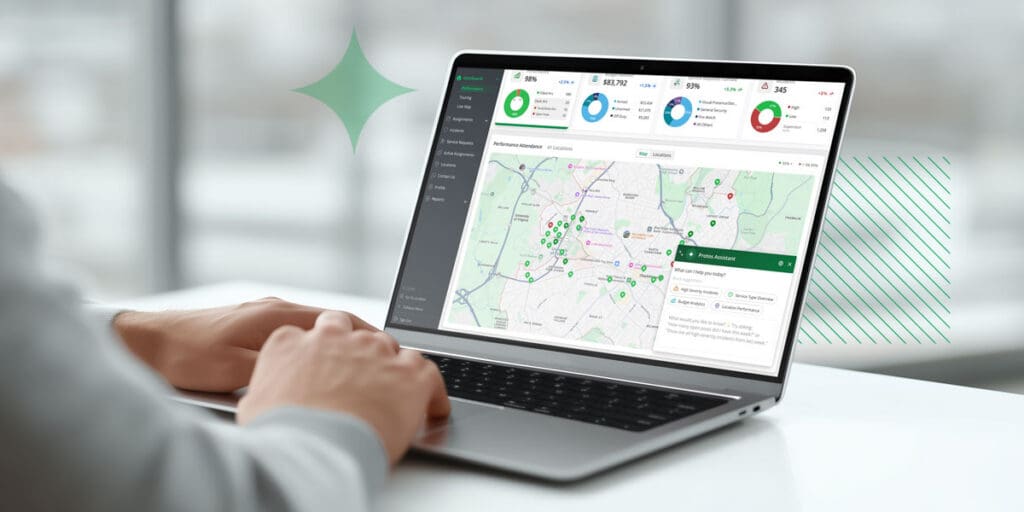
To establish true accountability, enterprise security programs must transition to automated real-time tracking. By utilizing mobile applications with GPS-verified attendance, security officers can only clock into a shift when their physical coordinates match the approved site radius. Linking this live data directly to an invoicing engine ensures that organizations calculate labor costs based entirely on actual hours worked.

High-Stakes Recovery: Navigating Physical Assets and Crowd Psychology

While digital continuity, remote servers and data backups form a major part of financial institution crisis planning, physical assets like cash, inventory and high-value materials carry immediate on-the-ground risks. Managing these assets in a disaster zone requires a completely different operational playbook.
The Social Signaling of Authority
When a facility is structurally compromised, leadership’s natural instinct is to request a highly visible show of force, such as a fleet of marked security vehicles. However, expert crisis management requires understanding crowd psychology. In What a Wildfire Taught Us About Financial Institution Crisis Planning, we discuss the behavioral psychology and risk mitigation behind a low-profile, discreet approach to high-value asset recovery.
Specialized Tactical Execution
Securing high-value assets or managing restricted access zones requires specialized teams capable of navigating local regulations and city officials. Following catastrophic events, areas may be blocked by local law enforcement, roadblocks or even the National Guard. A professional crisis partner like Protos Security can coordinate experienced off-duty security professionals to help secure boundaries, de-escalate crowd tension and work with municipal authorities on access permits.

Learning From the Crisis: The After-Action Review (AAR)
The post-crisis phase should never be a rushed race back to business as usual. Returning to normal operations without assessing the emergency response causes teams to miss an invaluable opportunity to turn snap judgments into a roadmap for future business continuity.
Constructing a Data-Driven AAR Framework
An effective AAR is not a perfunctory audit or a loose list of lessons learned; it is an important part of ensuring the lessons learned in the moment are documented and kept for future disasters, natural and otherwise. Before stakeholders gather, security teams must collect comprehensive data, including incident logs, dispatch timestamps, surveillance footage, GPS guarding metrics and emergency invoicing.
To avoid corporate blind spots, the review table must include more than just siloed executive leadership. In The After-Action Review for Retail: What Security Teams Miss After a Crisis, we detail which cross-functional stakeholders need to be involved in order to operationalize the plan on the ground and drive future accountability.
Elevating Security to a Strategic Imperative
Crisis management and post-disaster recovery are critical business continuity issues that affect people, liability and your bottom line. Multiple locations, highly volatile situations and complex regulatory requirements mean that leadership needs a strategic, unified blueprint to protect what matters most. Protos Security provides a modern security experience that dynamically adapts when, where and how it’s needed.